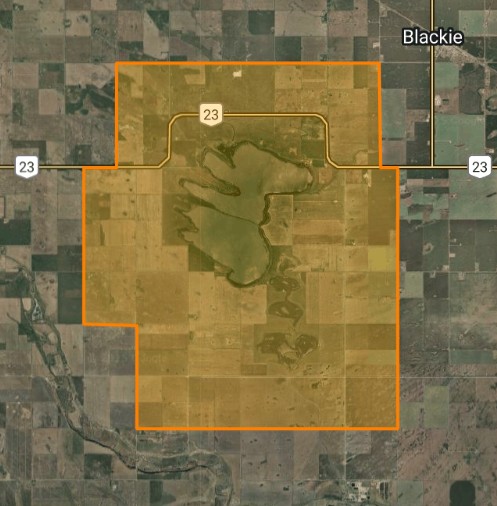
Frank Lake has been an Important Bird Area (IBA) since 2000. This designation is based on the significant number of birds congregating during the breeding season, and the presence of “at risk” species. In 2022, Frank Lake was given the additional designation of Key Biodiversity Area (KBA).
Records of birds at Frank Lake go back to the 1960’s. There have been 256 bird species documented in the area, including over 60 bird species that are designated as “at risk” by provincial or federal agencies. It is a hotspot of biodiversity in the prairies, helps mitigate the effects of drought and floods, and is an important location for nature in our province.
To help prevent Frank Lake from drying out, as it has in the past, a joint solution was formed between the Town of High River, Cargill Beef Processing plant, Alberta Environment and Ducks Unlimited Canada. A 10 km pipeline was installed from the Town of High River to Basin 1 at Frank Lake providing a stable inflow of treated effluent water to prevent the lake from drying out.
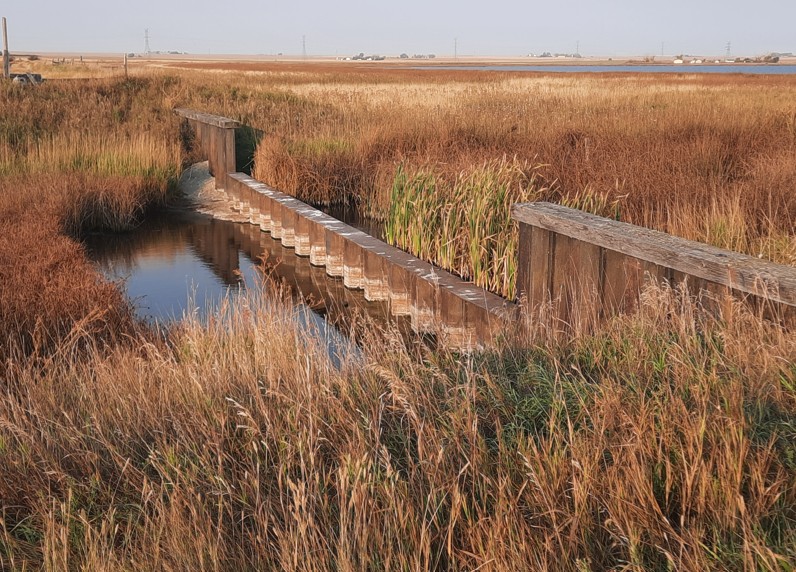
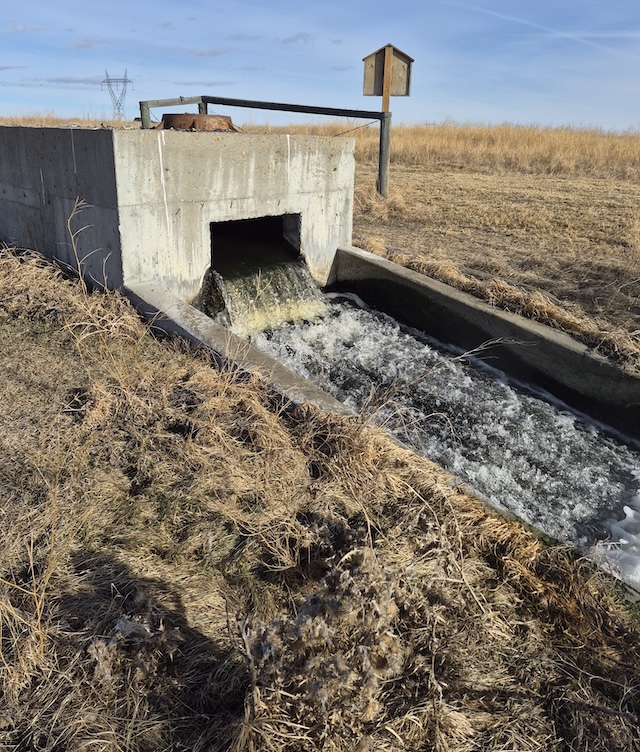
When Basin 1 has high water levels, it drains into Basin 2, which then drains into Basins 3 and 4 by a series of weirs. These weirs are set at different water levels in the basins. When too much water is in the basins, flooding neighbouring land, they will self regulate and drain over the weirs.
Interesting facts:
- During WWII from the fall of 1941 to spring 1942, when Frank Lake was dealing with a drought cycle, the dry lake basin was used briefly as an auxiliary landing field for the Royal Air Force that was established near High River, Alberta. Depending on water quality, you can still make out the landing field from the sky.
- During COVID, birders/photographers numbered in the mid hundreds, visiting Frank Lake on a daily basis, especially on weekends. To this day, Frank Lake is a highly active birding area.
- Frank Lake IBA/KBA conservation area is 101 km² in size, including all 4 basins.