Basin 1
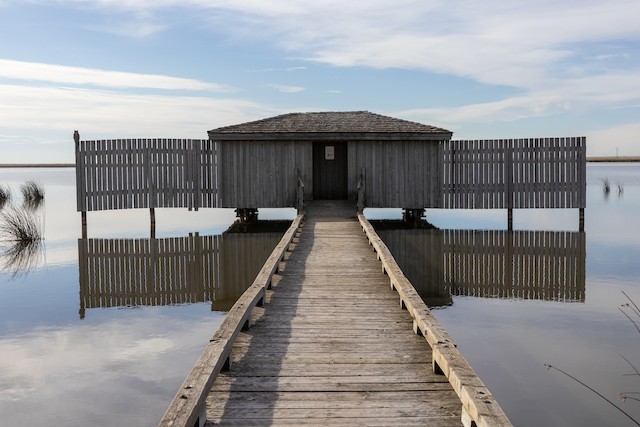
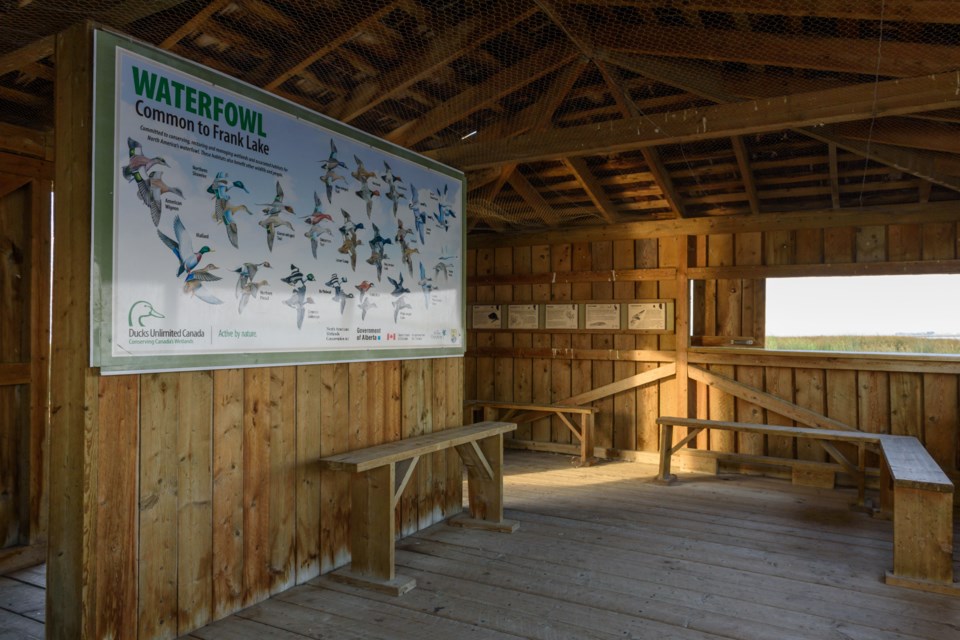
At Basin 1, you can find the Ducks Unlimited Canada boardwalk and duck blind. The board walk is 120m long and leads to the Ducks Unlimited Canada duck blind. Within that duck blind is an 180 degree view of the open water of Basin 1, with benches to sit and listen, and ledges to help get that perfect picture. Also in the duck-blind, you will find an information board about some of the different types of ducks, birds, and even bats found at Frank Lake.
Frank Lake Islands
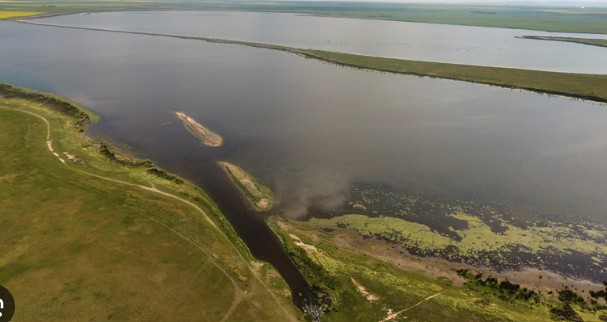
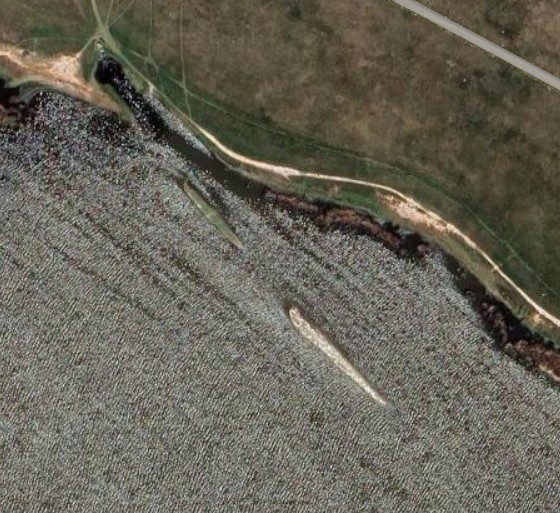
Islands 1 and 2 were created by Ducks Unlimited Canada. The two islands can be located south of the outflow discharge point. These islands are very popular with American White Pelicans, many species of Gulls, Black-necked Stilts and many other bird species. All year round, different bird species are using one or both islands.
Due to many years of water erosion, and heavy bird use, the islands have deteriorated. The Stewardship Committee through Nature Calgary are working with Ducks Unlimited Canada to rehabilitate the islands as close to their former size as possible, while also putting in safeguards to help prevent future erosion. This project was a longtime wish of the previous caretaker, who sadly passed away, and is named the Greg Wagner Legacy Project. In Greg’s honour, the Committee and Nature Calgary are working together to make his dream a reality. If you would like to donate to help the Stewardship Committee realize his vision, please click here to access the donation page. Please include a message that you want to designate your donation to Frank Lake.
Birds at Frank Lake
Frank Lake wetland and grassland areas attract a variety of birds ranging from waterfowl, shorebirds, marsh and grassland birds. The variety of bird species found at Frank Lake makes this conservation area an attraction for birders year-round.
Most common waterfowl seen at Frank Lake include diving and dabbling ducks such as the Northern Pintail, Mallard, Gadwall, Green-winged Teal, Northern Shoveler, American Wigeon, the colorful Ruddy Duck, Canvasback, Redhead and Bufflehead. During fall and spring migration you’re certain to see Trumpeter and Tundra Swans, and Snow Goose. In addition to these there is always a chance of a noteworthy sighting; in 2025 a Pink-footed Goose was spotted at Frank Lake!
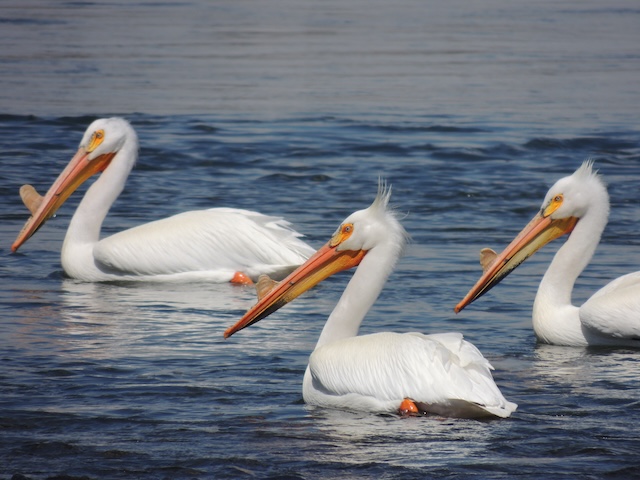
The two islands at Frank Lake are frequented by larger magnificent birds including the American Pelican, Canada Goose, and Double-crested Cormorants. Often seen feeding along the island shoreline are the American Avocet, Black-necked Stilt and other shorebirds.
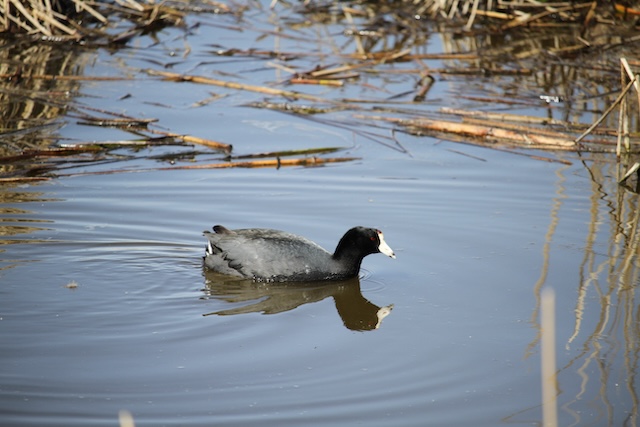
Take a stroll along the boardwalk towards the observation blind where you are certain to hear sounds from within the cattail and bulrushes that line the boardwalk; sounds like the chatter of the Marsh Wren and the krrp krrp call of the American Coot. More visible are the vibrant colored Red-winged black bird, Yellow-headed blackbird and Common Yellowthroat. The White-faced Ibis has become a frequent visitor and is often seen in the reed bed east of the boardwalk.
Grassland habitat in the area is an attraction for the Sprague’s pipit, and many sparrows such as the Vesper and Savannah Sparrow, Clay-colored Sparrow, Baird’s Sparrow, and other grassland birds including the melodious Western Meadowlark, and spectacular Horned Lark.
There are numerous species that spend time at Frank Lake; stay tuned as we explore these throughout the year.
If you are an eBirder, Frank Lake is found within the Calgary, CA-AB region. There are 9 hotspots in the Frank Lake area.

Plant Life at Frank Lake
Frank Lake is in the Foothills Fescue Grasslands Ecoregion of Alberta. Frank Lake is a large, shallow lake that is surrounded by emergent vegetation such as Hardstem Bulrush (Schoenoplectus acutus) and Cattails (Typha latifolia). Open shorelines include Rayless Aster (Symphyotrichum ciliatum) and Red Glasswort (Salicornia rubra) with non native and native grasslands in the drier areas. Pastures and cultivated fields surround the area.
Through our iNaturalist Project we are adding to the knowledge of plant species, as well as mammals, insects, amphibians, fungi and birds. Please consider added your observations to our project, Frank Lake (south) KBA (AB079).
We are highlighting species that have been observed at Frank Lake below:
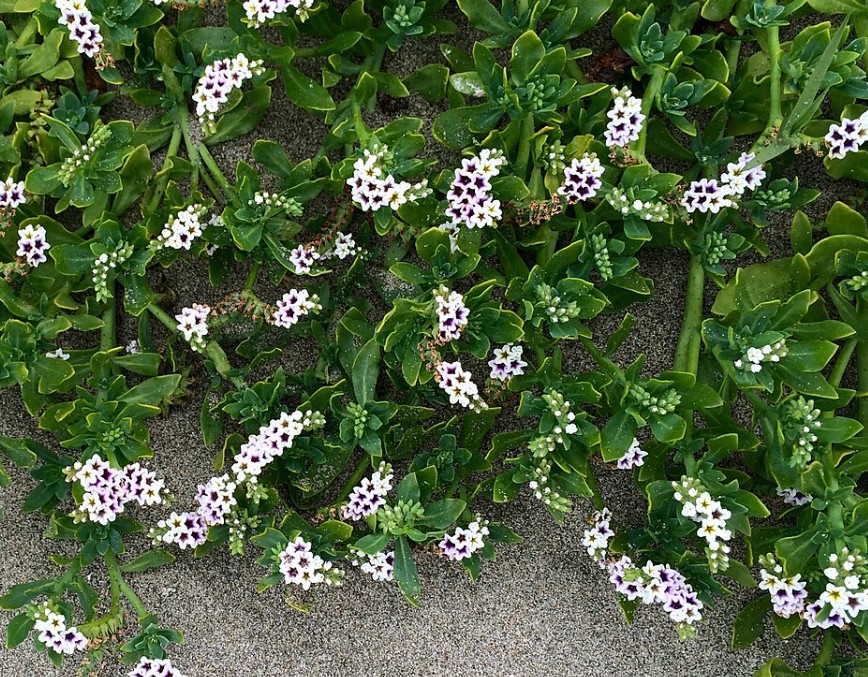
Heliotropium curassavicum var. obovatum – Alkali/Salt/Seaside Heliotrope
The Heliotrope family has 1 species in Alberta.
From iNaturalist: Heliotropium curassavicum var. obovatum is a perennial herb which can take the form of a prostrate creeper along the ground to a somewhat erect shrub approaching 0.5 m (1+1⁄2 ft) in height. The stem and foliage are fleshy, with the leaves thick and oval or spade-shaped. The plentiful inflorescence are curled, coiling double rows of small bell-shaped flowers. Flowers are 5-10 mm wide, with yellow or slightly purple-tinged throats. The fruit is a smooth nutlet. It thrives in salty soils, such as beach sand, alkali flats, and salt marshes.
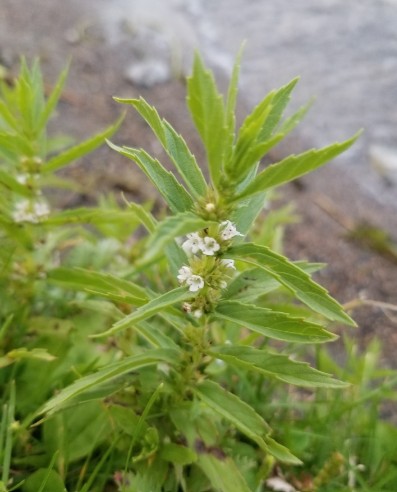
Lycopus asper – Rough Bugleweed/Western water-horehound
From iNaturalist: Lycopus asper is a species of flowering plant in the mint family known by the common name rough bugleweed. It is native to much of North America, where it can be found most often in moist areas, such as the soil near lakes. This is a perennial herb growing from a rhizome with thick, knobby tips. The plant grows erect to around 80 centimeters in maximum height, but is known to reach one meter. Its stem is lined with pairs of toothed leaves with heads of flowers in their axils. The flower is white and a few millimeters in length.
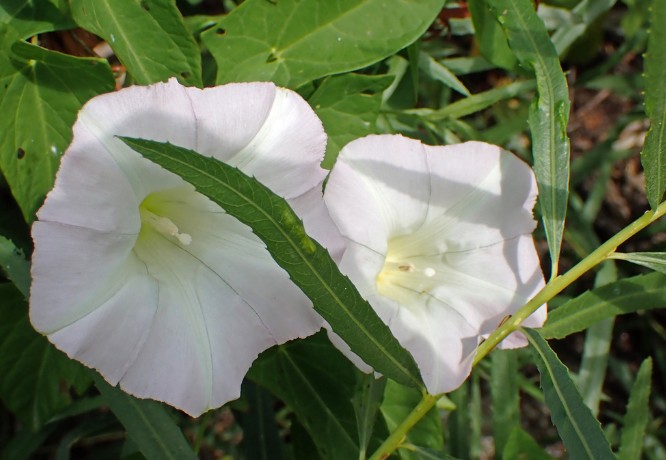
Calystegia sepium ssp.angulata – Hedge Bindweed/Wild Morning Glory
From iNaturalist: Calystegia sepium is an herbaceous perennial that twines in a counter-clockwise direction to a height of up to 3 m (10 ft). The leaves are arranged alternately on the spiralling stem; they are dull green above and paler below, simple and sagittate (arrowhead shaped), 5–10 cm (2–4 in) long and 3–7 cm (1+1⁄4–2+3⁄4 in) broad. The flowers are white, sometimes with pink windows, produced from late spring to the end of summer. The plant thrives in hedges,fields, borders, roadsides and open woods.
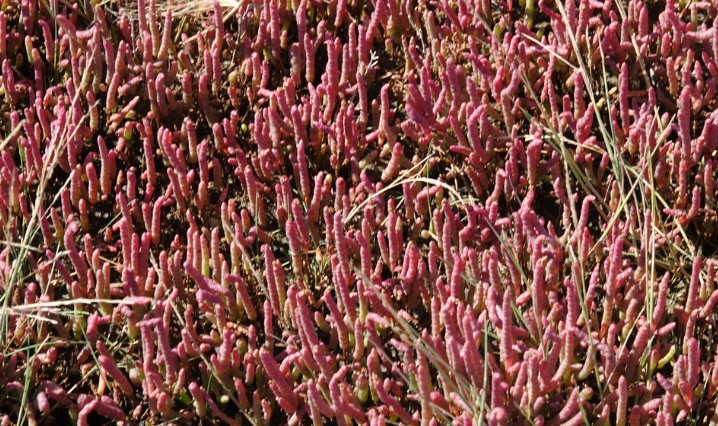
Salicornia rubra – Red Glasswort/Samphire for its gorgeous fall colour
From iNaturalist: Salicornia rubra, commonly known as the red glasswort or Rocky Mountain glasswort, is a species of flowering plant in the family Amaranthaceae. It is native to colder or higher areas of North America; the Yukon, Nunavut, British Columbia, Alberta, Saskatchewan, Manitoba, and Ontario in Canada, and the western and north-central United States. A halophyte, it is one of the most salt-tolerant plants of North America.